At its peak in 1920, American railroads carried 1.2 billion passengers annually. Trains connected every major city, hundreds of small towns, and vast stretches of territory that had no other practical transit option. Seventy years later, that network had collapsed to a federally subsidized skeleton. The story of how it happened is not a single failure — it’s a sequence of deliberate policy choices, corporate miscalculations, and structural economic shifts that compounded over decades.
The Peak Years: 1880–1920
The transcontinental railroad was completed in 1869, but the true golden age of American passenger rail began in the 1880s and reached full maturity by the early twentieth century. By 1916, the U.S. rail network covered 254,000 route miles — the largest in the world, and a figure it has never approached since.
The Infrastructure Behind the Boom
Railroad companies competed aggressively on speed, comfort, and route coverage. The Pennsylvania Railroad, New York Central, Union Pacific, and Santa Fe each operated flagship named trains that became national symbols. The 20th Century Limited between New York and Chicago covered 960 miles in 16 hours by 1902 — a scheduling feat that required precisely coordinated track access across multiple states.
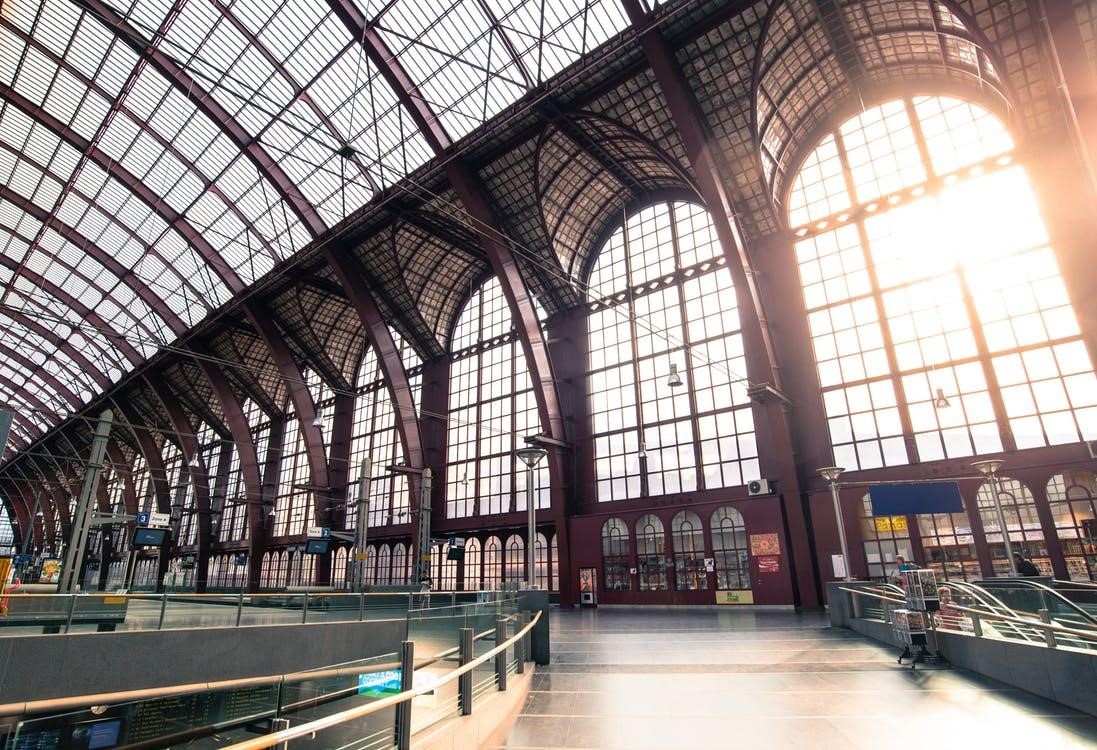
Stations were built as civic monuments. Grand Central Terminal in New York, Union Station in Washington D.C., and 30th Street Station in Philadelphia were not merely transit hubs — they were the largest and most architecturally significant public buildings in their cities. The investment signaled that rail travel was permanent infrastructure, not a passing technology.
Who Was Riding and Why
Passenger rail in this era served every income level. Pullman sleeping cars offered overnight luxury on long routes, while coach class provided affordable intercity travel for workers, immigrants, and rural families. The railroad was the only realistic option for travel over 100 miles in most of the country. No commercial aviation existed. Automobile ownership was limited. The train had no competition.
The Interwar Period: Refinement Under Pressure
The 1920s brought the first serious competition: the automobile. Car registrations in the U.S. jumped from 8 million in 1920 to 23 million by 1930. Railroads responded not by cutting back, but by upgrading. The 1930s produced some of the most celebrated trains in American history.
The Streamliner Era
Between 1934 and 1941, railroads introduced diesel-powered streamlined trains that cut travel times and modernized the passenger experience. The Burlington Zephyr debuted in 1934, covering the 1,015 miles from Denver to Chicago in 13 hours — a record. The Union Pacific’s City of Los Angeles, the Santa Fe’s Super Chief, and the Baltimore & Ohio’s Royal Blue followed in rapid succession.
These trains were engineering showcases: stainless steel exteriors, climate-controlled interiors, observation cars, and dining cars serving full-service meals. The Super Chief carried Hollywood celebrities between Los Angeles and Chicago so reliably that it was nicknamed “the Train of the Stars.” Ridership during World War II surged to record levels as fuel rationing and military logistics made the railroad indispensable again.
The Postwar Collapse: 1945–1970
The forces that destroyed American passenger rail did not arrive suddenly. They were built into postwar federal policy from the start.
The Highway System and Federal Subsidy Asymmetry
The Federal Aid Highway Act of 1956 committed $25 billion — eventually $114 billion — to build the Interstate Highway System. The funding mechanism was a dedicated federal fuel tax, meaning highway construction was structurally supported in a way rail never was. Railroads, by contrast, owned and maintained their own infrastructure entirely at private expense, while their competitors drove on publicly funded roads.
Commercial aviation received similar treatment. The Federal Aviation Act of 1958 established the FAA and committed federal resources to airport construction, air traffic control, and airspace management. Airlines operated on publicly built and maintained infrastructure. Railroads did not.
Automobile Culture and Suburban Expansion
Federal mortgage guarantees through the FHA and GI Bill fueled suburban development that was explicitly designed around car ownership. New suburban communities had no rail access by design. As population shifted outward from urban cores, the geographic base that had supported rail ridership contracted. A family in Levittown, New York had no use for intercity rail when every errand required a car.
Railroad Management Failures
The railroads themselves made critical errors. Focused on freight — which remained profitable — most railroad executives treated passenger service as a liability to be reduced rather than a business to be reinvented. They petitioned regulators to drop routes, downgraded equipment, cut dining car service, and allowed schedules to deteriorate. Passengers left, which justified further cuts, which drove away more passengers. The cycle was self-reinforcing.
Amtrak and the Managed Decline: 1971–Present
By 1970, most major railroads were losing money on passenger operations and seeking federal permission to exit the business entirely. Congress responded with the Rail Passenger Service Act of 1970, creating Amtrak as a quasi-public corporation to absorb the national passenger network.
What Amtrak Inherited
Amtrak launched on May 1, 1971 with aging equipment, deteriorating track, and a skeletal route map covering roughly half the pre-war network. The railroad industry had already done the damage. Amtrak’s founding assumption — that it would become self-sufficient within a few years — proved immediately wrong. It has required federal operating subsidies every year since 1971.
The Structural Problem That Remains
Amtrak operates most of its long-distance network on freight railroad track it does not own. Federal law gives passenger trains priority, but enforcement is weak and freight delays are routine. Outside the Northeast Corridor — the only segment Amtrak owns outright — on-time performance rarely exceeds 50% on long-distance routes.
The United States spends approximately $2 billion annually on Amtrak. For comparison, the federal highway program receives over $60 billion per year. The asymmetry that began in 1956 has never been corrected.
Why It Matters Now
The decline of American passenger rail was not inevitable. It was the cumulative result of unequal public investment, deliberate corporate exit, and planning decisions that locked in car dependency for generations. European and Asian rail systems that received equivalent public support during the same period became the dominant mode of intercity travel on their continents.
What America built instead was a highway network of extraordinary scale — and a passenger rail system that survives as a reminder of what was dismantled to pay for it.